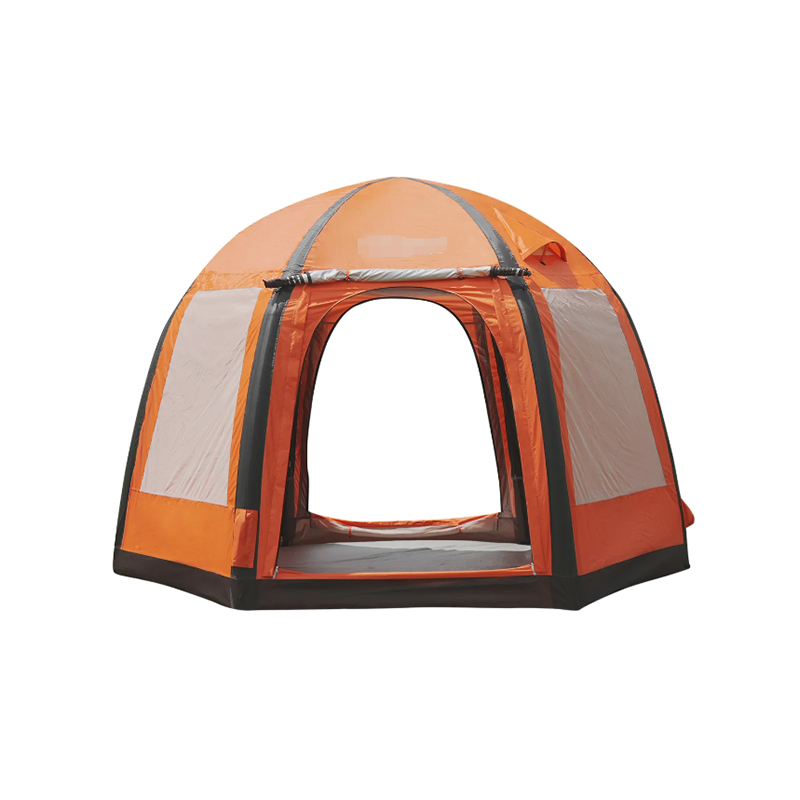
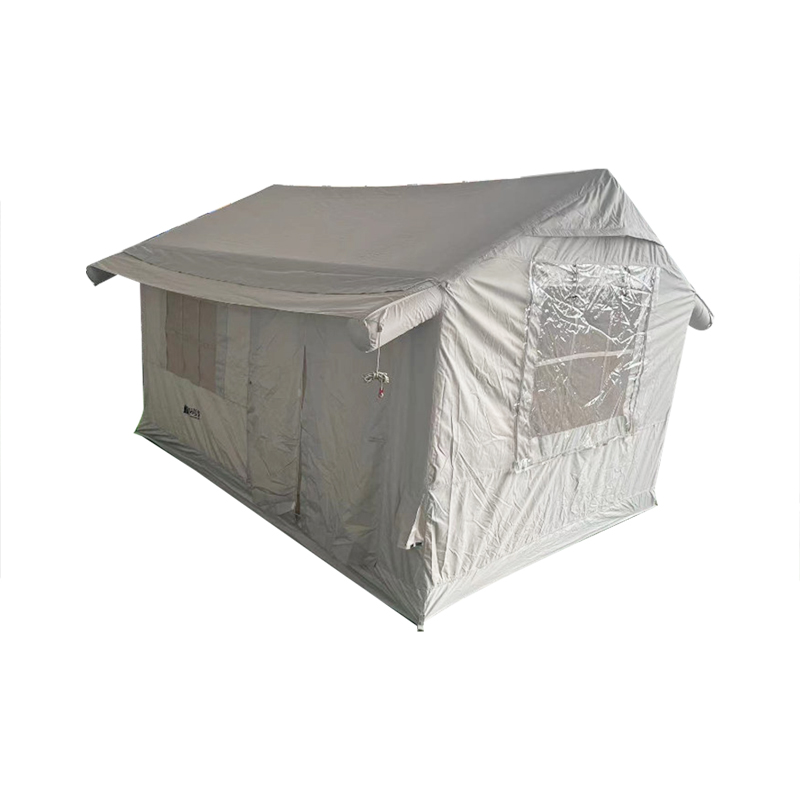
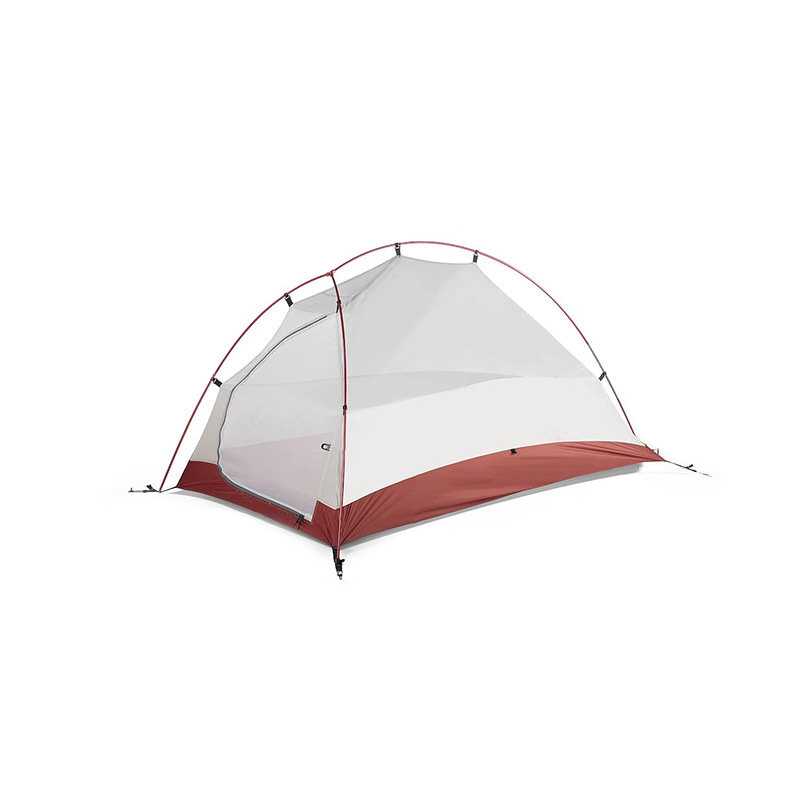
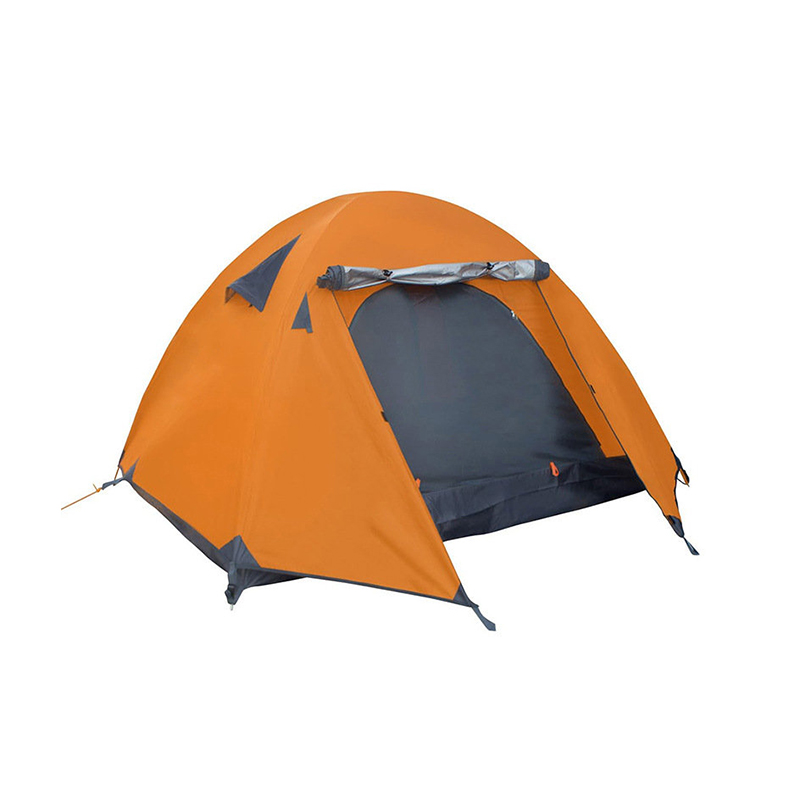
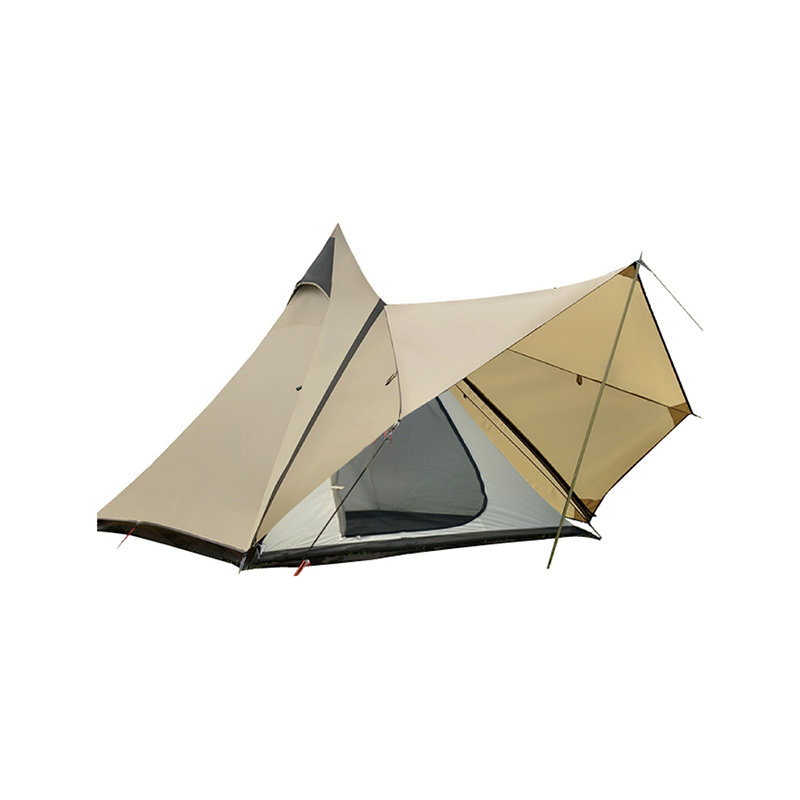
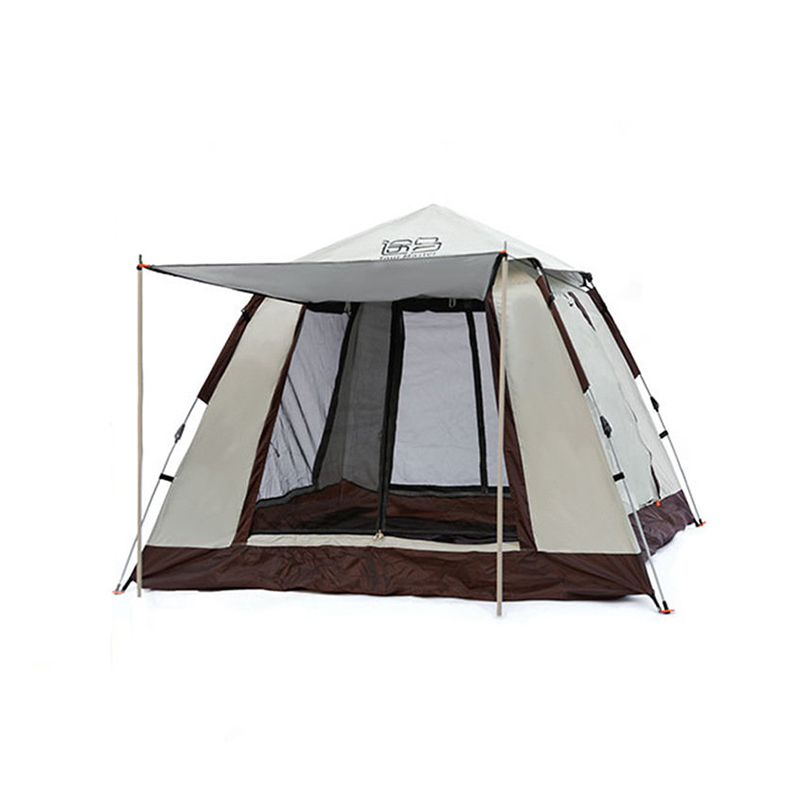
Puball inséidte hemispherical 2 doirse 4 fhuinneog


 Cuardaigh ...

Air beams have quietly rebuilt camping's oldest silhouette: two sloping walls, one ridge line, and no poles to thread. Here is how the design performs in real weather, where it beats aluminum and where it does not, and the exact specifications worth checking before you buy.
The short answer first: an inflatable A-frame camping tent is the fastest way to pitch a classic ridgeline shelter. You unroll the tent, attach a pump to two or three reinforced air columns, and the familiar triangular profile stands up in two to five minutes. There are no pole sleeves to thread, no shock-corded sections to snap together, and no second person needed to hold the frame while you clip the flysheet.
Anyone who has arrived at a campsite at dusk in drizzle knows the routine the pole version demands: dig out the poles, feed them through narrow sleeves, discover a ferrule has worked loose, and start again. The air-beam A-frame removes almost all of that friction, which is a large part of why this once-retro shape is reappearing on family campsites.
This guide comes from the manufacturing side — we cut, stitch and weld air-column tents every working day, for our own range and for OEM partners — so it concentrates on the three questions buyers actually ask us: is the shape stable, what happens when a column leaks, and which specifications separate a tent that lasts five seasons from one that lasts two.
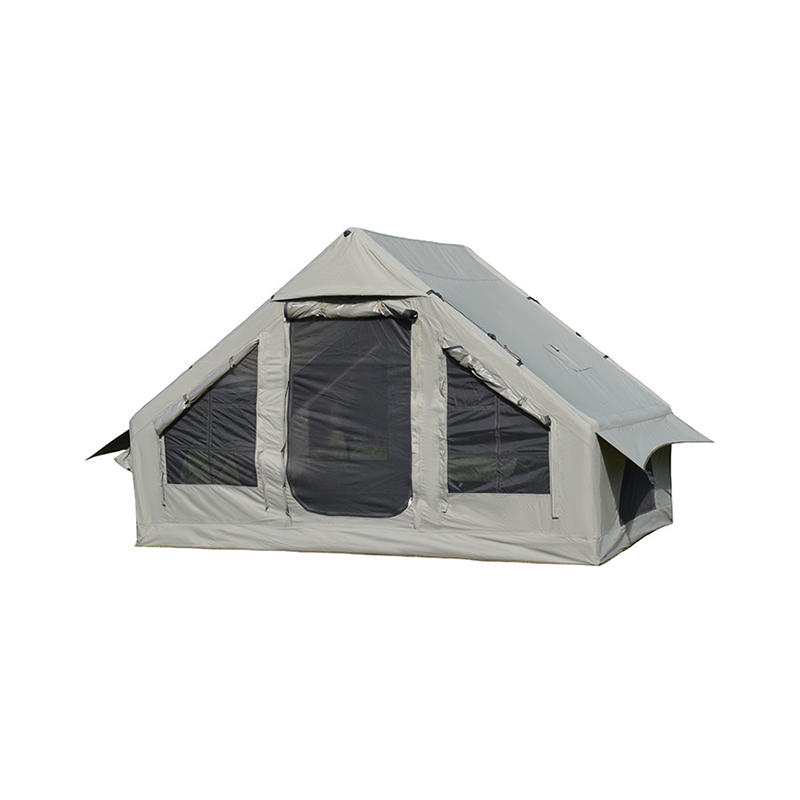
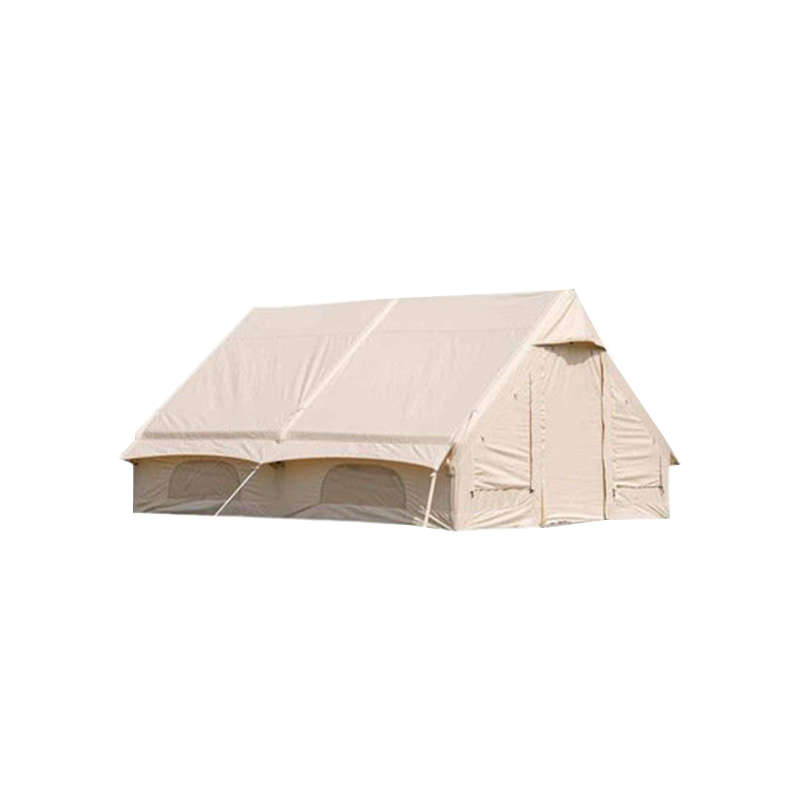
The A-frame silhouette is simple: two fabric planes slope down from a central ridge to the ground, closed at each end by a triangular gable wall. Traditional versions built that shape with a ridge pole and uprights. In an inflatable A-frame, the rigid members are replaced by air columns — welded PVC or TPU tubes that hold a firm, drum-like pressure once inflated. In most catalogs, including ours, the construction appears under gable or ridge tent labels rather than a literal "A-frame" tag, so it pays to search both terms.
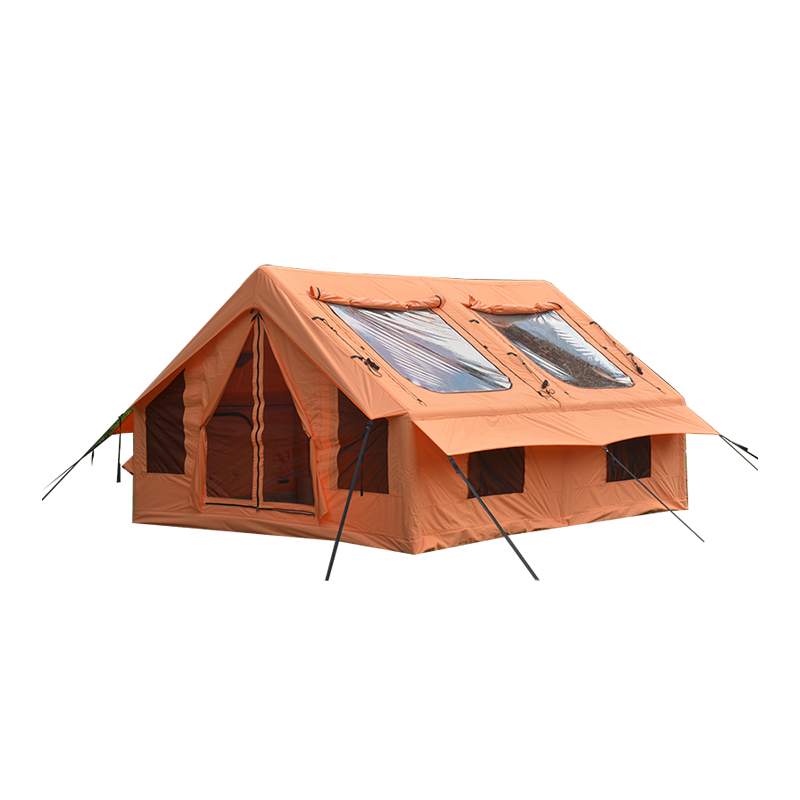
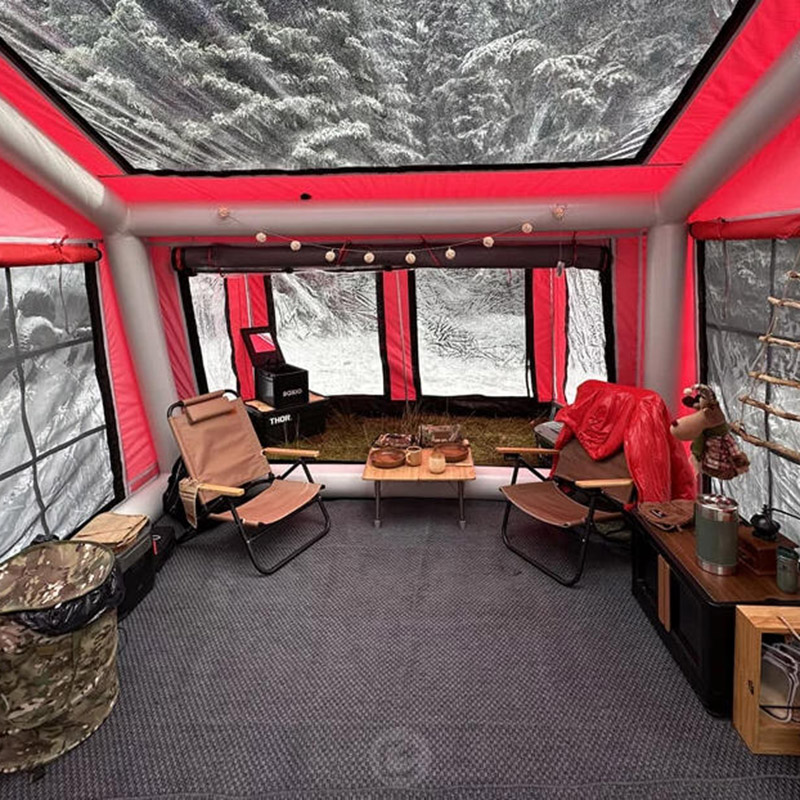 Inflatable Gable Tent with Red A-Frame Design This PVC air-column gable tent replaces ridge poles with inflatable tubes, offering fast pump setup, transparent windows for light and views, and a spacious interior suited to family camping. View Product →
 The engineering is elegant. Once the two end columns are rigid, the fabric between them is already in tension, so the roof keeps its shape with no intermediate support. Larger models add a third column mid-span, giving a taut, weather-ready ridge across six to twelve metres. If you want the structural detail, we have written separately about how air columns carry the structural load in a PVC inflatable tent .
Not every inflatable A-frame is a pure triangle. Newer designs bow the columns into shallow arches, blending A-frame and tunnel geometry: the tent still reads as a ridgeline shelter but pitches with the tension logic of a tunnel. When comparing models, check whether the columns are straight or curved, because it changes how the tent behaves in wind from the ends and how much headroom runs along the ridge.
Pitch time gets the headlines, but it is not the only advantage. Done properly, the profile delivers:
The ridge does the engineering. Once the two end columns are rigid, every panel between them is in tension — which is why an A-frame holds its shape even when a guy line fails or the wind swings around.
In wind, orientation matters more than for a dome: point a gable end into the prevailing breeze, use every guy point, and the low, sloped profile behaves like a wedge rather than a wall. That is also why the silhouette has survived a century of campsite fashion.
Neither construction wins everywhere. The table below is how we would brief a buyer choosing between the two for weekend and family use.
| Consideration | Air-beam A-frame | Pole-built A-frame |
|---|---|---|
| Pitch time | 2–5 minutes with a hand or electric pump | 10–20 minutes, longer in cold or wind |
| Most common failure | A puncture or valve leak, patchable at camp | A bent or snapped pole section needing a splint |
| Packed size and weight | Bulkier and heavier; columns will not fold small | Folds compact and carries lighter |
| Typical cost | Higher, due to valve and bladder hardware | Lower, with simple proven hardware |
| Best suited to | Car camping, basecamps and glamping pitches | Budget builds and trips where every gram counts |
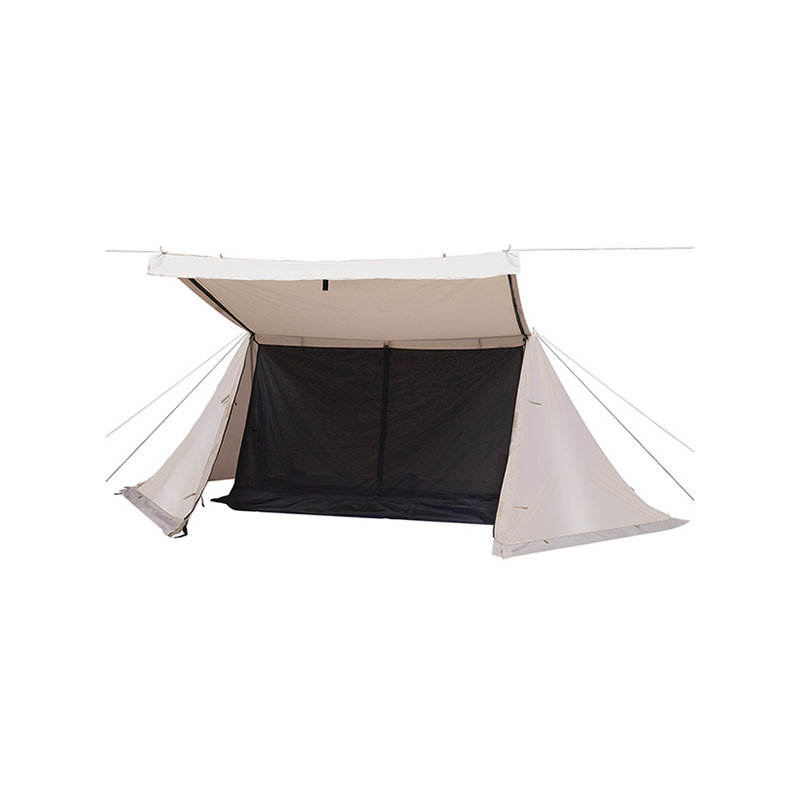
If you want the silhouette itself at the lowest upfront cost, with no dependence on a pump, the pole-built classic remains a legitimate choice — the A-Frame Teepee Camping Tent shows how little the basic recipe has changed in a century.
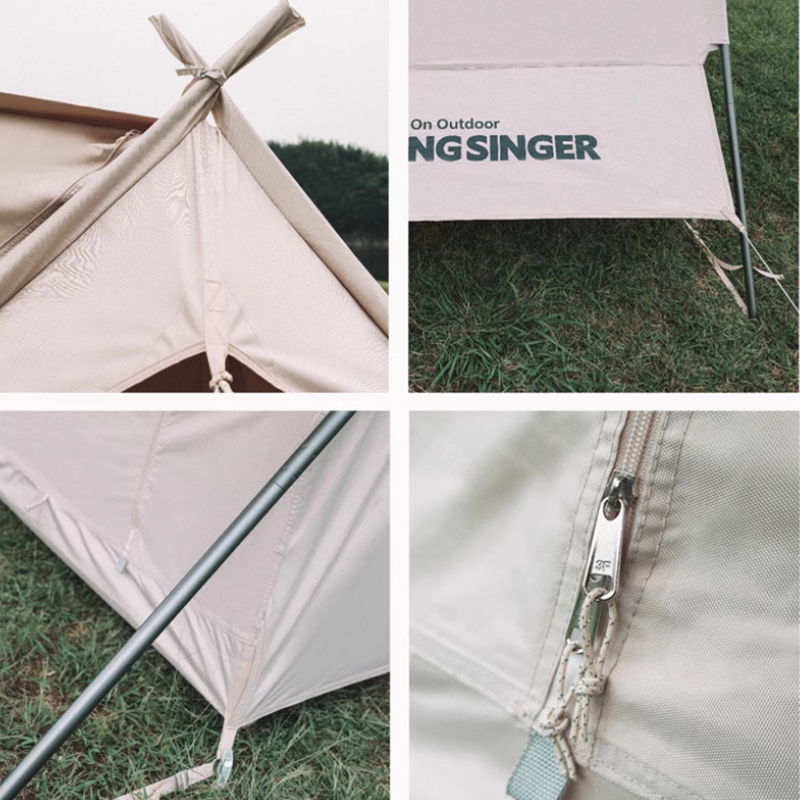 A-Frame Teepee Camping Tent A traditional pole-built A-frame tent in durable Oxford cloth with four-sided mesh ventilation and waterproofing, offering the classic ridgeline silhouette at low cost without needing a pump. View Product →
 The market has largely voted on convenience: coverage of why more campers are switching to air-beam designs highlights setup speed and family usability as the deciding factors, and our own inquiry logs say the same thing season after season.
TPU columns are lighter, stay flexible in cold weather and weld cleanly, which makes them the better choice for four-season use. PVC columns cost less and tolerate abrasion well, but they stiffen below freezing and weigh more for the same diameter. Whichever you choose, prefer a design where each column has an inner bladder inside an outer sleeve: the sleeve takes the scuffs, the bladder holds the air, and either part can be replaced on its own.
Look for a polyester oxford shell in the 210D to 600D range with a polyurethane coating, and read the hydrostatic head figure rather than trusting the word waterproof: 2000 mm is the practical minimum for a family tent, while 3000 mm or more earns its keep on exposed ground. Seams should be taped or welded, and a UV-resistant finish matters more than most buyers realise, because ridgeline panels face the sun all day.
A one-way valve lets you disconnect the pump without losing pressure, and a pressure-relief valve is a worthwhile bonus for hot days. Most air beams run at low pressure — commonly somewhere between 5 and 9 psi, about 0.3 to 0.6 bar — so use a gauge when you have one and follow the printed figure rather than feel.
Ask whether the brand supplies a patch kit and a spare bladder as standard, because in this category repairability is part of the purchase, not an afterthought.
The design fits a specific set of trips unusually well:
It is the wrong tool for ultralight backpacking. Air columns and valves add weight, and a two-person inflatable rarely lands below six kilograms, against two to three for a good pole tent. For that job, weight wins and the pump stays at home.
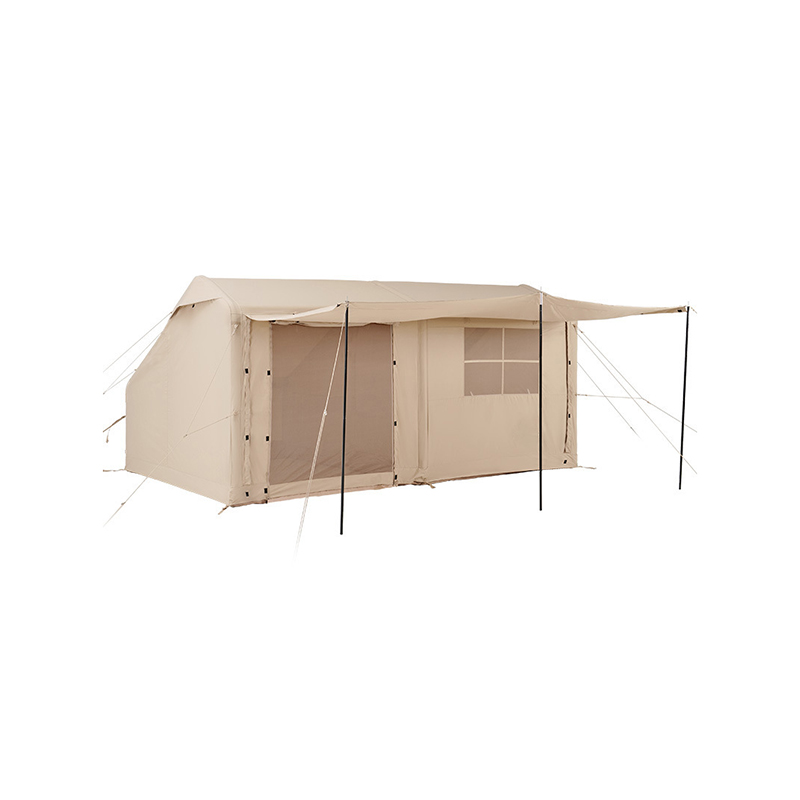
For buyers who like the ridgeline look but want tunnel-style livability, the curved-column hybrids mentioned earlier are the interesting middle ground. Our Inflatable Tunnel Tent takes exactly that approach: pitched end-on to the wind it behaves like a tunnel, and from the side it reads as a modern A-frame.
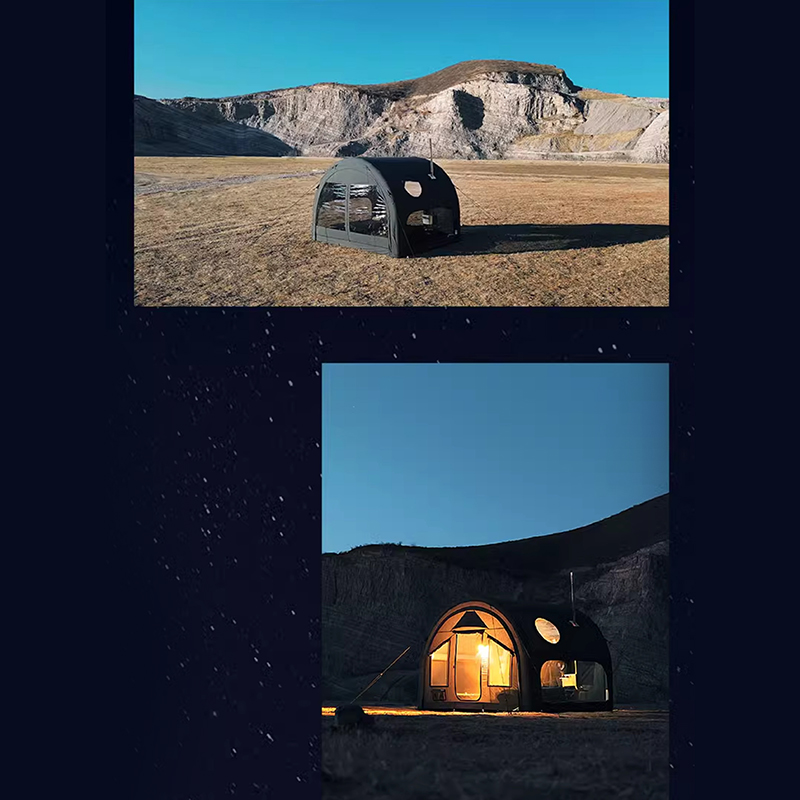 Inflatable Tunnel Tent for 2-5 People A hybrid with PVC integrated air columns, 10 square meters of space, floor-to-ceiling windows, and a TPU viewing door, pitching quickly while blending tunnel livability with an A-frame look. View Product →
 An inflatable A-frame camping tent trades some packed bulk and upfront cost for the lowest-friction pitch in family camping and one of the most weather-honest silhouettes in the category. If the checklist below matches how you travel, the shape deserves its comeback.
The A-frame is the oldest drawing in the camping catalogue, and the welded air column is what makes the same drawing feel new. When the specification lines above hold up in the detail pages, that combination is about as close to an easy campsite as tent design currently gets.